
Do I Need Bone Grafting Before Dental Implants?
Bone grafting before dental implants is not automatic, but it is common when the jawbone does not have enough height, width, or density to support an implant securely. A dental implant functions like an artificial tooth root, so it needs stable bone around it to heal well and handle chewing forces over time.
The short answer is that you may need grafting if bone has been lost after tooth removal, gum disease, trauma, or long-term tooth loss. The only reliable way to know is through a clinical exam and imaging, often with a 3D cone beam CT scan, which shows bone shape and volume more clearly than a standard dental X-ray.
BrightCraft Dental & Laser offers dental implants and advanced implant planning in Burbank, CA, including careful evaluation of whether bone grafting may be needed.
Why Bone Quality Matters
A dental implant is placed into the jawbone and then heals through a process called osseointegration. This means the bone gradually bonds to the implant surface, creating the stability needed for normal function.
That stability plays a major role in how long implants last. If the bone is too thin or too soft, the implant may not get enough initial support.
That does not always mean treatment will fail. However, it can raise the risk of poor healing, implant movement, or an implant position that is harder to restore properly.
This is why dentists look beyond whether an implant can physically fit. They also evaluate whether the bone can support long-term implant stability under daily biting pressure.
When Bone Grafting Is Commonly Recommended
Bone grafting may be recommended when a tooth has been missing for a while. After a tooth is lost, the jawbone in that area often shrinks because it no longer receives the normal stimulation created by the tooth root.
For one missing tooth, a single tooth implant plan may include socket preservation or a localized ridge graft to make the site more predictable. Patients with extensive tooth loss may consider full mouth implants, where staged grafting or larger reconstruction may be part of treatment, or alternatives such as all-on-4 implants.
Grafting is also common after advanced gum disease, also called periodontal disease, which can destroy the bone that supports teeth. In other cases, trauma, infection, cyst removal, or naturally thin anatomy in the upper jaw may leave too little bone for predictable implant placement.
A dentist may also recommend grafting if placing the implant without added bone would create a poor angle, affect appearance, or make cleaning more difficult. In that sense, grafting is not only about making implants possible. It is often about making the final result more stable and easier to maintain.
How Dentists Decide If You Need It
The decision usually starts with an exam, a dental history, and imaging. A 3D scan helps measure bone width and height, identify nearby structures like the sinus or nerve canal, and show defects in the ridge where the tooth used to be.
Dentists also evaluate the site in relation to the final tooth, not just the implant. That matters because an implant placed in a limited bone may still be a poor choice if the crown would end up too long, too bulky, or difficult to clean.
Factors That Often Influence the Decision
- How long the tooth has been missing
- Whether there has been bone loss from gum disease
- The location of the implant, especially the upper back jaw
- The size and shape of the planned implant
- Whether the area needs support for appearance as well as function
- Smoking, uncontrolled diabetes, and other factors that may affect healing
In some cases, grafting can be done at the same time as implant placement. In others, the site needs to heal first so the bone can mature before the implant is placed.
Situations Where Grafting May Not Be Needed
Some patients have enough natural bone for implant placement without grafting. This is more likely when the tooth was removed recently, the surrounding bone stayed intact, and the site still has good width and height.
In selected cases, a dentist may place an implant immediately after extraction or soon after healing if the anatomy is favorable. That approach can reduce treatment time, but it still depends on careful case selection and does not remove the need for imaging or planning.
The key point is that not every implant needs a bone graft. The need depends on the condition of the specific site, not on implants as a category.
Types of Bone Grafting You May Hear About
There is no single grafting method for every implant case. The technique depends on whether the problem is limited width, limited height, a defect in one wall of bone, or reduced bone under the sinus in the upper back jaw.
Common terms include socket preservation after extraction, ridge augmentation to rebuild a narrow area, and sinus lift surgery to create more bone height in the upper molar region. A sinus lift raises the sinus membrane and places graft material below it so an implant can be supported more predictably.
You may also hear about different graft materials, including your own bone, donor bone, animal-derived mineral, or synthetic materials. The right choice depends on the defect, the treatment plan, and the clinician’s judgment. For more detail on what these procedures involve, see our article on bone grafting surgery.
What Bone Grafting Changes About the Timeline
One reason patients ask this question is practical. Bone grafting may extend the treatment timeline, sometimes by several months, because the graft needs time to heal and integrate with the surrounding bone.
That delay can feel frustrating, but in many cases it improves the chance of a stronger and more maintainable result. Rushing into implant placement with limited bone may save time at first while creating more risk later.
A good treatment plan balances speed with biology. In implant dentistry, stable healing usually matters more than the shortest possible schedule.
Signs Bone Loss May Be Part of the Problem
Patients usually cannot tell on their own whether there is enough bone for an implant. Still, some patterns make bone loss more likely, such as a tooth missing for many years, a history of loose teeth from gum disease, a denture that has become less stable, or visible collapse of the gum and ridge where a tooth used to be.
Even so, symptoms and appearance are not enough to confirm whether grafting is needed. Some areas look flat but still support an implant, while others appear acceptable and turn out to have limited width on a 3D scan.
That is why imaging matters. It replaces guesswork with measurements.
When to Seek Prompt Dental Evaluation
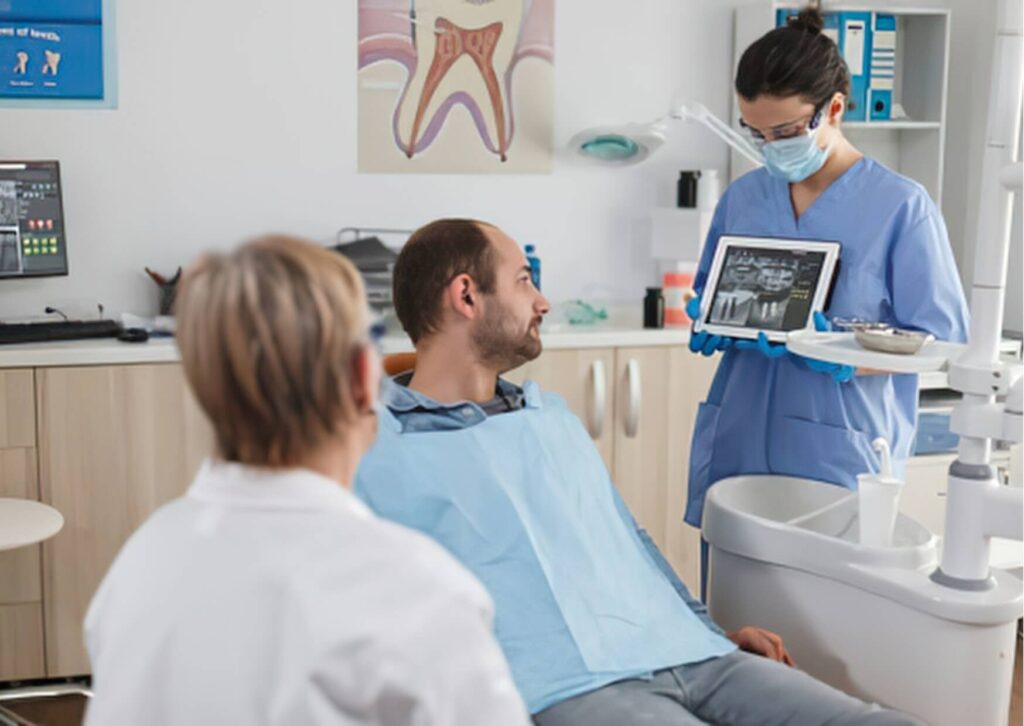
If you are considering an implant and have swelling, drainage, severe pain, fever, a bad taste that keeps returning, or a tooth that feels increasingly loose, schedule a prompt dental evaluation. These signs may point to active infection or advanced dental disease that needs attention before implant planning.
Urgent review is also important after recent trauma to the mouth or jaw, especially if your bite feels different or teeth seem displaced. Persistent swelling or facial pain should not be dismissed as a simple implant-planning issue.
General information can help you understand the process, but it cannot replace an exam. If the area is painful, changing quickly, or difficult to interpret, a dentist or dental specialist should assess it directly.
The Best Next Step If You Are Unsure
If you are asking whether you need bone grafting before dental implants, the most efficient next step is an implant consultation with appropriate imaging. In real practice, this is usually where the uncertainty clears up because the decision depends on anatomy, not guesswork.
A useful consultation should explain whether the site has enough bone now, whether grafting would improve implant position or longevity, and whether treatment can be staged or combined. That kind of planning is more valuable than broad online advice because it connects scan findings to the final tooth, bite, and long-term maintenance.
If you are comparing options, ask how the bone condition affects stability, appearance, cleaning access, and timeline. Those answers usually tell you far more than a simple yes or no.
BrightCraft Dental & Laser in Burbank, CA provides dental implant evaluations and implant planning for patients from nearby North Hollywood and Glendale; call (818) 237-4977 to schedule an evaluation.
FAQs
Can a dental implant be placed without a bone graft?
Yes, sometimes. If the jawbone has enough height, width, and density for stable placement, an implant may be placed without grafting.
Is bone grafting always done before implants?
No. Bone grafting is only used when the existing bone is not ideal for predictable implant support or implant positioning.
How do dentists check if there is enough bone?
Dentists usually combine a clinical exam with dental imaging, often a 3D cone beam CT scan. This allows more accurate measurement of the bone and nearby structures.
Does missing a tooth for a long time increase the chance of needing grafting?
Often, yes. The jawbone commonly shrinks over time after tooth loss, which can make grafting more likely.
Is bone grafting only about making the implant fit?
No. It may also improve implant angle, gum support, appearance, and long-term cleanability, all of which matter for a durable result.
Related Articles
Flexible Payment Options
Get started in minutes with no impact on your credit—plus take advantage of 0% APR financing for up to 24 months.
- Quick approval process
- Soft credit check only - no effect on your score
- Apply funds to any dental service
Click below to check your eligibility - completely risk-free.