
Are Porcelain Implants Worth It? A Practical Look at the Benefits and Considerations
For most patients, the better question is not whether porcelain implants sound more natural or more advanced. It is whether they offer enough benefit in appearance, tissue response, and personal preference to justify their limits in cost, availability, and long-term evidence.
In dentistry, porcelain implants usually mean zirconia dental implants. Zirconia is a strong ceramic material, not the same porcelain used in household dishes, and that difference matters because its strength, fracture behavior, and design options are different.
Whether they are worth it depends on where the implant will go, how much bite force it must handle, how visible the area is when you smile, and how experienced the dentist is with that system. In selected cases, porcelain implants can be a reasonable option, but they are not automatically better than titanium.
BrightCraft Dental & Laser in Burbank, CA offers porcelain implants and related implant care for patients seeking metal-free tooth replacement.
What Patients Usually Mean by Porcelain Implants
When patients ask about porcelain implants, they are usually asking about a white ceramic implant instead of a gray metal one. In current practice, that almost always means zirconia.
Zirconia has a tooth-colored appearance, which can help in patients with thin gum tissue or in the front of the mouth where esthetics matter more. It also avoids metal, which some patients prefer for cosmetic or personal reasons.
That said, the visible part of an implant result is usually the crown and the gum contour, not the implant body hidden in the bone. A highly esthetic result depends just as much on planning, bone support, and soft tissue management as it does on implant material.
Where the Value Comes From
The main advantage of zirconia implants is aesthetics. In a patient with thin gums, gum recession, or a high smile line, a white implant may reduce the chance of dark gray show-through near the gumline.
Some patients also prefer a metal-free restoration. That preference is understandable, but it is still important to separate personal preference from proven medical necessity.
There is also interest in how plaque behaves on zirconia surfaces. Some studies suggest favorable soft tissue response around zirconia, but that does not mean ceramic implants are immune to inflammation, bone loss, or implant failure.
If the case is highly visible and tissue thickness is limited, esthetic benefit in the smile zone may be the strongest reason to consider porcelain implants. In less visible areas, that advantage may be small.
Where the Tradeoffs Start
The biggest limitation is the depth of evidence. Titanium implants have decades of strong clinical data, broad system options, and a long track record in both simple and complex cases.
Zirconia implants have shown promising results, but the research base is still smaller. That matters because long-term performance is not only about initial healing, but also about how an implant handles years of chewing, gum changes, repairs, and complications.
Published comparisons of implant survival still show a much deeper evidence base for titanium. For many patients, that makes titanium the more predictable choice.
Design flexibility is another issue. Some zirconia systems offer fewer restorative options, which can matter when the bite is difficult, the space is tight, or the final tooth position needs fine adjustment.
For some full-arch or comprehensive cases, options like all-on-4 implants or a full mouth restoration may be more relevant. Those solutions often rely on systems with extensive restorative flexibility.
Ceramic materials are strong, but they fail differently from metals. Titanium tends to bend before breaking, while zirconia is more vulnerable to fracture under stress if case selection or loading is not ideal.
This does not mean zirconia is weak. It means the margin for error may be narrower in some situations, especially for patients with a heavy bite or in areas with high chewing force.
How Porcelain and Titanium Implants Compare
| Factor | Zirconia Implant | Titanium Implant |
| Appearance under thin gums | White color may help in visible areas | Gray tone may show through in some thin tissue cases |
| Long-term evidence | Growing but more limited | Extensive and well established |
| Restorative flexibility | Often more limited by system | Usually broader options |
| Fracture behavior | Strong ceramic, but less forgiving if overloaded | Very durable and generally more forgiving mechanically |
| Availability | Fewer clinicians and systems | Widely available |
| Cost | Often higher | Often more predictable in cost |
| Best use cases | Selected esthetic cases, metal-free preference | Most routine and complex implant cases |
For many patients, titanium remains the more practical choice because it is easier to plan, easier to restore, and supported by more long-term data. Dental implants remain the workhorse option for routine and complex cases.
Porcelain implants become more compelling when esthetics and metal avoidance are top priorities and the case is mechanically favorable. The right choice depends on the details of your anatomy and bite, not just the material itself.
When Porcelain Implants May Be Worth It
Porcelain implants may be worth it when the implant is in the front of the mouth, the gum tissue is thin, and there is a real concern about dark color show-through. They may also make sense when a patient strongly prefers a ceramic option after a balanced discussion of benefits and limitations.
They can also be reasonable when bite forces are moderate, spacing is favorable, and the dentist has meaningful experience with zirconia systems. Experience matters because material choice is only one part of success.
A well-selected zirconia case can perform well. The decision should be based on anatomy, force, esthetics, and system design, not marketing language.
When They May Not Be Worth the Extra Cost or Complexity
If the implant is in a back molar area with high chewing load, the aesthetic advantage may be minimal while the mechanical demands are higher. In that setting, the practical value of zirconia often drops.
They may also be less attractive when the case is complex, such as limited bone volume, unusual bite relationships, or a need for highly customized restorative parts. Cases with limited bone volume may require bone grafting, and titanium systems usually offer more flexibility for solving those problems.
If the gums are thick and the final crown will fully control the visible appearance, a ceramic implant may not change the cosmetic outcome very much. In those cases, paying more for the material alone may not improve the result in a meaningful way.
Questions That Matter More Than the Material
A better implant conversation usually includes questions beyond zirconia versus titanium. How much bone is present, how stable is the bite, how thick are the gums, and what does the long-term maintenance plan look like?
It is also worth asking how often the dentist places zirconia implants, what system is used, and what backup options exist if the case changes during treatment. Those practical questions often predict success better than material preference alone.
If procedure experience or discomfort is a concern, patients can read more about do implants hurt. In implant dentistry, planning quality often matters more than material choice.
A well-planned titanium case will usually outperform a poorly selected zirconia case. The same is true in reverse when a ceramic implant is chosen carefully for the right esthetic situation.
Red Flags That Need Prompt Dental Review
If there is swelling, pus, increasing pain, a loose implant, a cracked restoration, or bleeding that keeps returning, the area should be evaluated promptly. These signs may point to infection, overload, soft tissue inflammation, or mechanical failure.
A new implant that never feels comfortable to bite on, or an older implant that suddenly changes, also deserves attention. Persistent symptoms do not always mean the implant is failing, but they should not be monitored casually at home.
Urgent evaluation is especially important after trauma, sudden fracture, or rapid gum changes around an implant. Early assessment can sometimes prevent a larger problem.
How to Decide If They Are Worth It for You
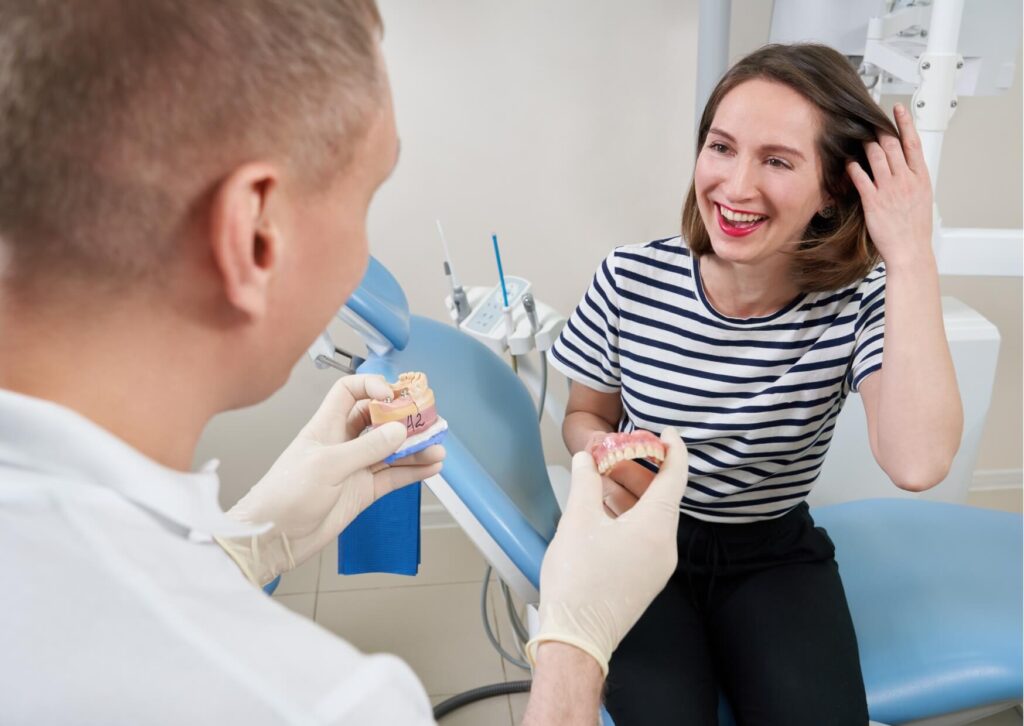
Start with the reason you are considering them. If the goal is a better cosmetic result in a visible area, zirconia may offer real value.
If the goal is simply to replace a missing tooth in a lower-risk, less visible area, titanium may be the more efficient choice. Bite force, tooth position, gum thickness, and available bone all affect whether the theoretical advantages of a ceramic implant will matter in your case.
Finally, weigh the evidence and the dentist’s experience. A material can sound appealing on paper, but long-term success depends on whether it is being used in the right situation by a clinician who understands its limits.
If you are focused on long-term outcomes, read more about implant longevity. A consultation that compares both options side by side is usually the fastest way to tell whether porcelain implants are worth pursuing.
If you're considering porcelain implants, BrightCraft Dental & Laser in Burbank, CA provides porcelain implant consultations for patients from North Hollywood and Toluca Lake. Call (818) 237-4977 to schedule.
FAQs
Are porcelain implants safer than titanium implants?
Not necessarily. Both materials can work well, but safety depends heavily on case selection, surgical planning, bite forces, and long-term maintenance.
Do porcelain implants look more natural?
They can, especially in the front of the mouth or under thin gum tissue. In many cases, though, the crown design and gum contour have a bigger effect on appearance than the implant material.
Do porcelain implants last as long as titanium?
They may last well in selected cases, but titanium has a longer and stronger long-term evidence base. That is one reason many dentists still consider titanium the default option.
Are porcelain implants worth the higher price?
Sometimes, but not always. They are most likely to feel worth it when the aesthetic benefit is real and the case is mechanically favorable.
Who should ask for a second opinion before choosing one?
Anyone facing a complex implant case, a back-tooth replacement with heavy bite force, or a recommendation based mainly on marketing claims rather than anatomy and function should consider a second opinion.
For readers weighing esthetic front-tooth decisions, consider whether a single tooth implant or a porcelain implant better meets your goals and anatomy.
Related Articles
Flexible Payment Options
Get started in minutes with no impact on your credit—plus take advantage of 0% APR financing for up to 24 months.
- Quick approval process
- Soft credit check only - no effect on your score
- Apply funds to any dental service
Click below to check your eligibility - completely risk-free.